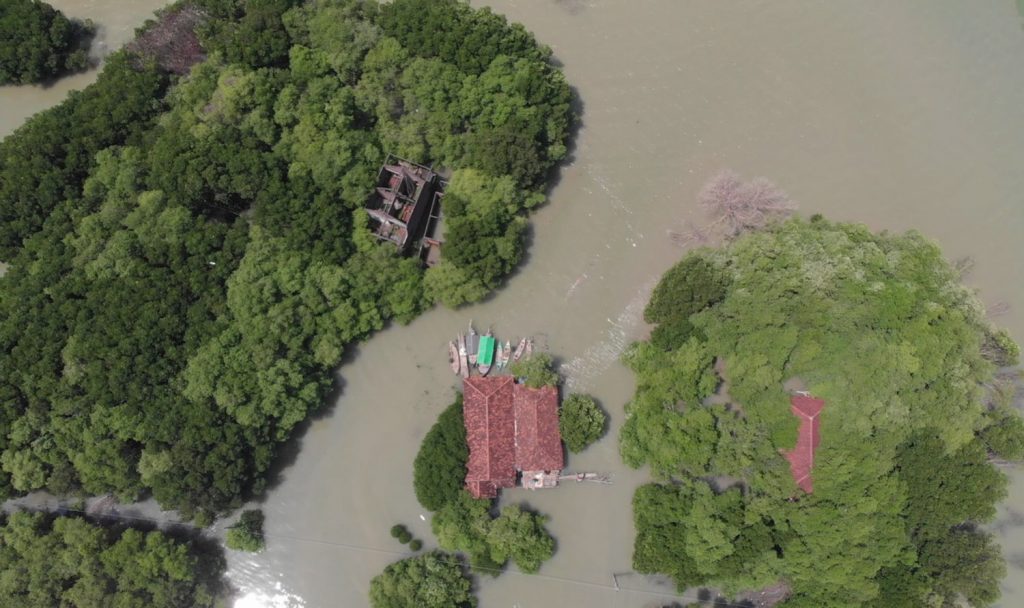
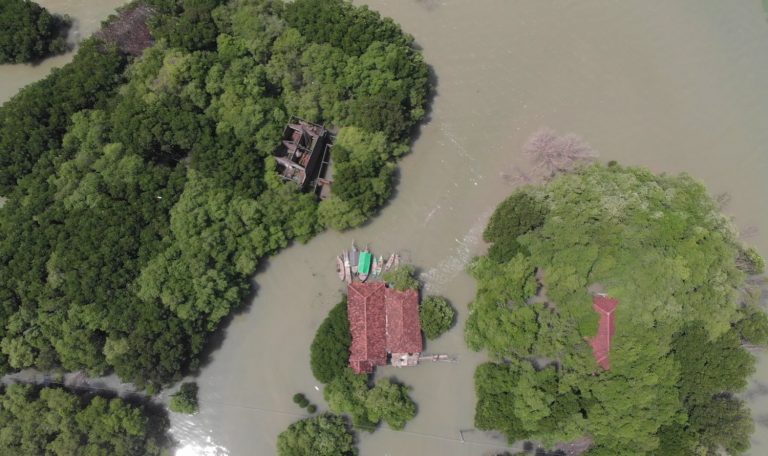
Bedono hamlet in Bedono Village, Sayung District, Demak Regency, almost swallowed by sea abrasion. Hundreds of people there are forced to relocate because their homes were damaged. Photo taken at the end of 2019. (Photo: Hartatik) Jakarta – Over 11,000 disasters that occurred over the last 50 years are caused by weather, climate and water-related hazards, causing about 2 million deaths and an economic loss of USD 3.6 trillion. Losses caused by rising sea levels and storm surges reach USD 1 trillion every year. More than 600 million people or about 10 percent of the world’s population live in coastal areas less than 10 meters above sea level. People living in coastal areas face existential risks due to climate change. “About 40% of the world’s population lives within 100 kilometers of the coast. They are on the front lines most affected by climate change,” said Dr Moushumi Chaudhury, Program Director for Community Resilience, The Nature Conservancy. This was conveyed in a global webinar entitled “Living Between Land and Sea: A Webinar for Journalists on Covering Coastal Resilience” held by Earth Journalism Network (EJN), Thursday (17/2). This webinar also presented two other presenters, Stefanie Tye (Climate Resilience Researcher from the World Resources Institute) and Joydeep Gupta (EJN India Manager). Chaudury said that intense storms, high tides and flooding exacerbated by climate change and rising sea levels threaten the lives, livelihoods and property of coastal communities. He described the integration of nature-based solutions into community resilience planning and implementing relevant risk reduction activities. Examples of these nature-based solutions include rehabilitating mangrove and coral reef ecosystems as buffer to the effects of strong winds and waves, or restoring coastal hydrology to support natural regeneration, which in turn increases resilience. “In addition to increasing climate resilience, coral reefs can reduce wave energy by up to 97 percent. Meanwhile, mangrove forests are able to prevent property damage of up to USD 5 billion and reduce the risk of flooding for 15 million people every year,” he added. Nature-based solutions are increasingly being recognized as effective multi-use solutions, to help vulnerable people become more resilient to climate change. Meanwhile, Stefanie Tye highlighted the impact of climate change will affect every element and every layer in the public sector, as well as the private sector. Climate threats to coastal areas will continue to be the center of attention “That’s why integrating, or mainstreaming adaptation at multiple levels, is key,” said Tye. (Hartatik)
Jakarta — Philippine mango farmers and agriculture officials have visited Indonesia to learn sustainable pest control methods and mango processing techniques as the two countries seek to improve productivity and ...
By Roffie Kurniawan Jakarta — Indonesian President Prabowo Subianto has urged ministers to contain forest and peatland fires as thick haze disrupts schools and threatens public health across Indonesia and ...
Jakarta — Indonesia showcased agricultural products and food innovations at the Food and Agriculture Organization’s (FAO) global “From Seeds to Foods” exhibition in Rome, highlighting the country’s agricultural biodiversity, traditional ...
by Nabiha Shahab Mama Lota does not particularly like eating one of the traditional legumes she grows in her garden. Yet every planting season, she continues to sow its seeds ...
Jakarta — For Indonesia’s commercial and industrial (C&I) companies, the transition to cleaner energy is increasingly a business decision shaped not only by sustainability targets, but also by energy costs, ...
Jakarta — Indonesian civil society groups have urged the government to give legal force to its national biodiversity strategy, warning that weak implementation and environmentally destructive investments threaten the country’s ...
Jakarta – Indonesia has called for stronger international cooperation to turn global climate commitments into concrete action as countries prepare for the UN climate conference, COP31, in Türkiye next month, ...
Jakarta — Indonesia must accelerate industrial decarbonisation to protect its export competitiveness as global markets tighten requirements for low-carbon products, the Institute for Essential Services Reform (IESR) said on Thursday, ...
by Nisa Novita and Israr Albar* Indonesia is burning again. The recurrence of severe fires during the 2026 El Niño should force a reassessment of how the country defines successful ...
Jakarta — The Institute for Essential Services Reform (IESR) has backed West Java Governor Dedi Mulyadi’s decision to temporarily halt construction of an artificial intelligence data centre in Jatiluhur, Purwakarta, ...
by Roffie Kurniawan Indonesia expects growing data-centre investment to increase electricity demand in the coming years, adding pressure to expand generation and grid infrastructure while providing more renewable power sought ...
by: Roffie Kurniawan Indonesia will revise its national electricity supply business plan, or RUPTL, to accommodate a proposed 100 gigawatt-peak solar expansion over the next two to three years, as ...