Jakarta — The head of UNFCCC has called for a rapid global transition to renewable energy, warning that continued dependence on fossil fuels is driving economic instability and insecurity.
In a video address to Green Transformation (GX) Week in Yeosu, Republic of Korea, on Monday, April 20, Executive Secretary Simon Stiell said, “Clean energy is the antidote to fossil fuel cost chaos, because it is cheaper, safer and faster-to-market.”
His remarks come as geopolitical tensions disrupt global energy markets, exposing vulnerabilities in fossil fuel supply chains. “War has – once again – revealed the soaring costs of fossil fuel dependency,” he said, noting that conflicts can choke economies and drive up costs for households and businesses.
By contrast, Stiell highlighted the resilience of renewable energy. “Wars don’t disrupt the supply of sunlight for solar power, and wind power does not depend on vulnerable shipping straits,” he said, adding that renewables enable governments to “regain control of their economies and their national security.”
He urged countries to accelerate the clean energy transition while avoiding new fossil fuel lock-ins, particularly coal, even as they respond to short-term energy crises. Strong climate action, he said, will be central to economic competitiveness as demand for low-carbon solutions grows.
“The market for climate solutions will only grow. All the biggest Asian economies have signalled that clean energy is now central to their economic growth and security strategies,” Stiell said.
The GX Week event runs alongside UN Climate Week, which convenes policymakers, businesses and civil society to advance practical climate solutions and translate global commitments into on-the-ground action.
“UN climate weeks are just one way we are working to help translate COP decisions and pledges into concrete outcomes in communities, bringing our process closer to the real economy,” Stiell said. (nsh)
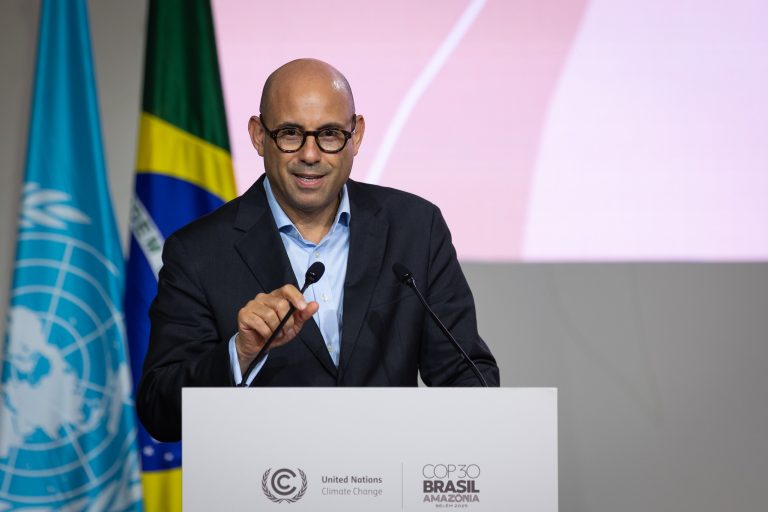
Banner photo: UN Climate Chief Simon Stiell closing the COP30 in Belem, Brazil. November 22, 2025. Source: UN Climate/Kiara Worth