Jakarta — Indonesia is accelerating the rollout of waste-to-energy plants across several regions, as the government seeks to tackle mounting landfill pressures while cutting methane emissions.
The Ministry of Environment said this week it had signed cooperation agreements to develop waste-to-energy (PSEL) facilities in North Sulawesi, East Kalimantan and Jambi, part of a broader shift to treat waste as a resource for power generation. Minister Hanif Faisol Nurofiq recently signed several cooperation agreements to initiate these projects, the ministry said on Monday, April 13. He emphasised that waste must now be viewed as a valuable resource rather than a burden.
The projects will adopt a regional “agglomeration” model to secure stable waste supply. In North Sulawesi, the Manado Raya scheme will integrate five municipalities, while in East Kalimantan facilities are planned for Samarinda and Balikpapan with a combined capacity exceeding 1,200 tonnes of waste per day. A similar system in Jambi is expected to process around 670 tonnes daily.
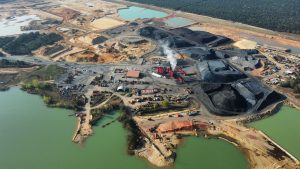
Officials say the expansion is driven by growing strain on existing landfills, many of which are nearing capacity or still rely on open dumping. Sites such as Sambutan in Samarinda and Manggar in Balikpapan highlight the urgency, while the new facilities are also expected to support waste management for Indonesia’s planned new capital.
The push follows a presidential target to achieve full waste management coverage by 2029 and eliminate open dumping by 2026. Pressure intensified after a deadly landslide at the Bantar Gebang landfill in March that killed seven people and disrupted waste services.
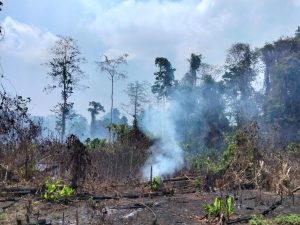
Beyond safety concerns, the government is framing the transition as a climate measure. Landfills are a major source of methane — a greenhouse gas far more potent than carbon dioxide — particularly in Indonesia where organic waste makes up roughly half of total waste streams.
Analysts say converting waste into energy could help curb emissions while addressing urban waste challenges, though the effectiveness of the approach will depend on technology choices, financing and long-term operational capacity.
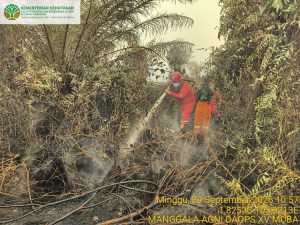
Experts from WRI Indonesia point out that because nearly 50% of Indonesian waste is organic, it produces massive amounts of methane in traditional landfills, often leading to dangerous fires. By shifting to PSEL technology, the government intends to capture this potential and meet the Global Methane Pledge, which targets a 30% reduction in emissions by 2030.
This surge in PSEL development is driven by a presidential mandate to reach 100% waste management by 2029 and to end the practice of open dumping at all landfills by 2026. The urgency of this shift was underscored by the tragic landslide at the Bantar Gebang landfill in March 2026, which claimed seven lives and disrupted waste distribution for weeks. (nsh)
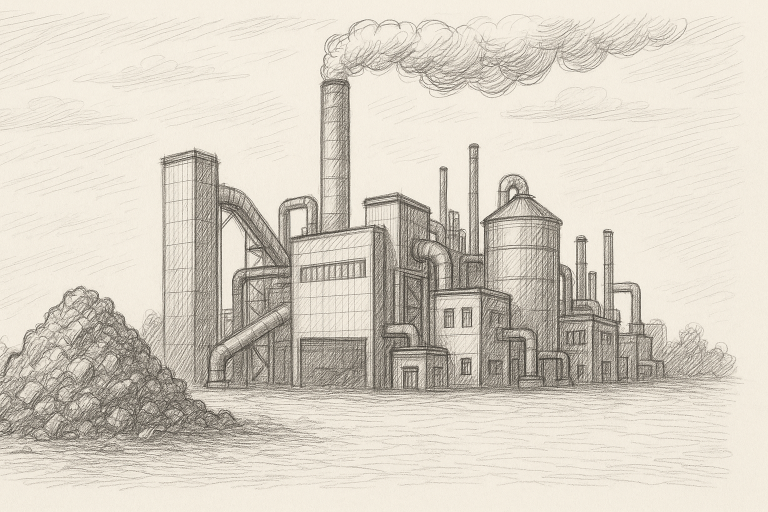
Banner photo: Image generated by OpenAI’s DALL·E via ChatGPT (2025)