Jakarta – An Indonesian nickel producer has removed key information about its coal-powered operations from its website shortly after a formal complaint was filed with the Singapore Exchange (SGX) over the financing of its activities, raising concerns among climate campaigners about transparency in the sector.
Environmental finance group Market Forces said on Monday, March 16, the disclosures from Harita Nickel Group were taken down after the organisation lodged a complaint against Singapore bank Oversea-Chinese Banking Corporation (OCBC) for potential misleading conduct linked to its financing of coal-powered nickel processing operations in Indonesia. The complaint argues that OCBC’s sustainability disclosures may not fully reflect its exposure to industrial coal power plants used to run nickel smelters.
“It’s very concerning that following our complaint to the Singapore Exchange regarding potential misleading conduct by OCBC over its funding for Harita Nickel Group, the Indonesian company removed public disclosures regarding its coal power operations,” said Binbin Mariana, Asia Energy Finance Campaigner at Market Forces.
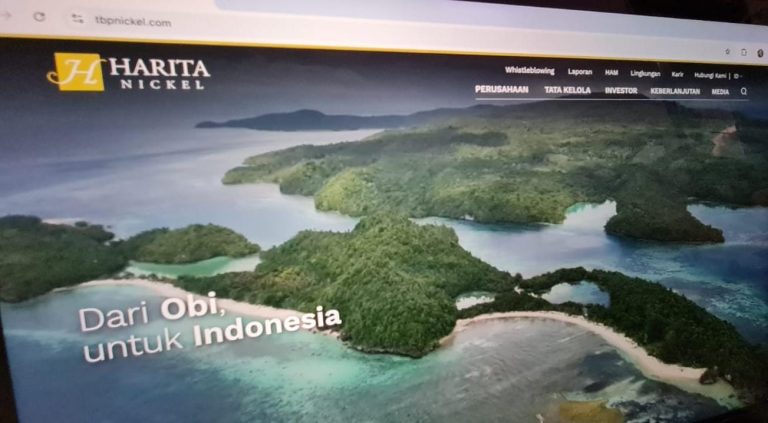
She said specific figures previously available on the company’s website had disappeared. “Specific figures detailing 1,670 MW of total capacity previously accessible on their website as recently as February 2026 have been erased and replaced with generalised language,” she said.
“This sudden reduction in transparency is a red flag, and Singapore’s regulators need to investigate why this data was scrubbed shortly after being cited in a formal complaint,” said Binbin.
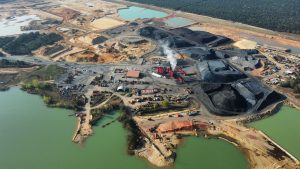
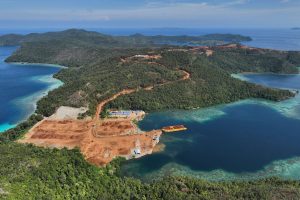
The complaint filed by Market Forces centres on OCBC’s financing of companies linked to Harita’s nickel complex on Obi Island, Indonesia, which relies heavily on captive coal-fired power plants to run energy-intensive smelting operations. The group currently operates about 910 megawatts (MW) of coal power capacity and plans to expand this to around 1,670 MW to support growing nickel production.
Market Forces argues that such exposure could conflict with OCBC’s Responsible Financing Framework, which pledges to exclude project financing for new coal plants and sets thresholds limiting coal-related exposure for corporate clients.
Beyond OCBC, Binbin also urged broader scrutiny of the banks backing Indonesia’s coal-powered nickel expansion. “This concerning corporate behaviour highlights that OCBC, DBS, and UOB must urgently reevaluate their relationship with Harita and the harmful emissions caused by its coal-powered nickel,” she said.
Singapore-based lenders have faced growing pressure from campaign groups over what they describe as a “loophole” in coal-exclusion policies: while banks have pledged to stop financing new coal plants for electricity generation, companies building coal-fired power stations to supply industrial facilities such as nickel smelters are often still eligible for financing.
The case highlights the growing scrutiny of climate-related disclosures by financial institutions and the companies they fund, particularly as global demand for nickel rises due to its role in electric-vehicle batteries and the energy transition. (nsh)
Banner photo: Screenshot of Harita Nickel’s website