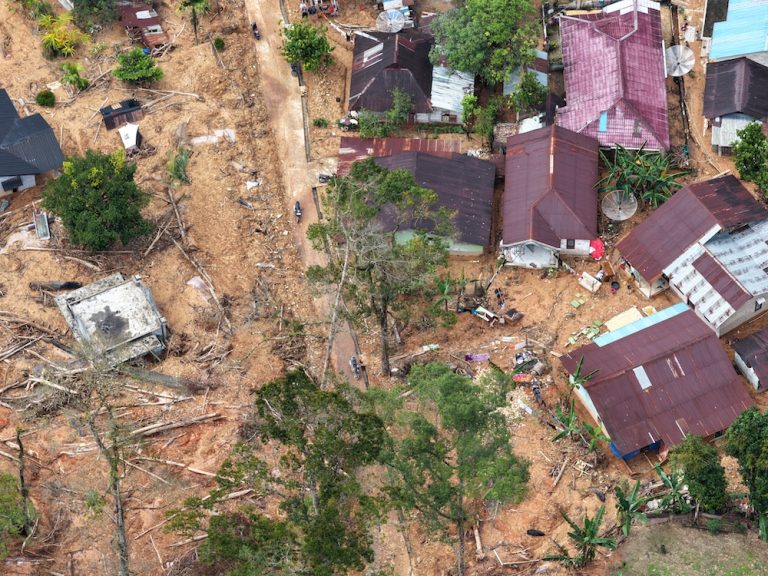
Jakarta — New research by environmental groups Earthsight and Auriga Nusantara has linked large-scale illegal logging in North Sumatra to the deadly floods and landslides that struck the island in late November, killing more than 1,100 people and displacing over a million others.
The investigation found that hundreds of hectares of natural forest were cleared illegally within the concession of pulp and timber company PT Toba Pulp Lestari (TPL) in the Batang Toru watershed, one of the areas hardest hit by the disaster
The cleared land lies on steep upland terrain officially designated as protected forest and recognised by the government as highly prone to landslides.
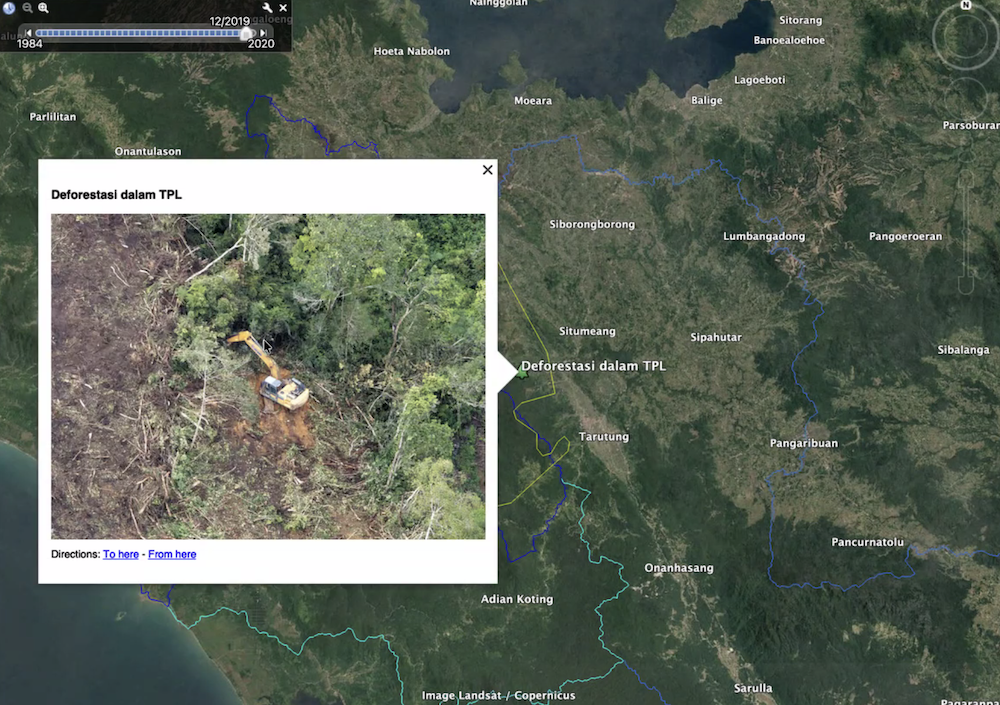
Satellite imagery analysed by the groups shows extensive deforestation in the Aek Raja block of TPL’s concession between 2021 and December 2025, with clearing accelerating in the months leading up to the floods. The researchers documented landslides occurring adjacent to recently cleared areas immediately after Cyclone Senyar made landfall on 26 November.
“This was not just a natural disaster,” said Timer Manurung, Chair of Auriga Nusantara, at the launch of the report on Monday, December 29. “Many experts have said this was also an environmental disaster. What we are seeing is how deforestation in upland areas worsens the impacts of extreme weather,” he said, adding that the findings were intended to support “fact-based discussion and policy debate.”
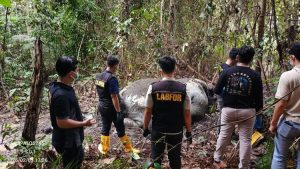
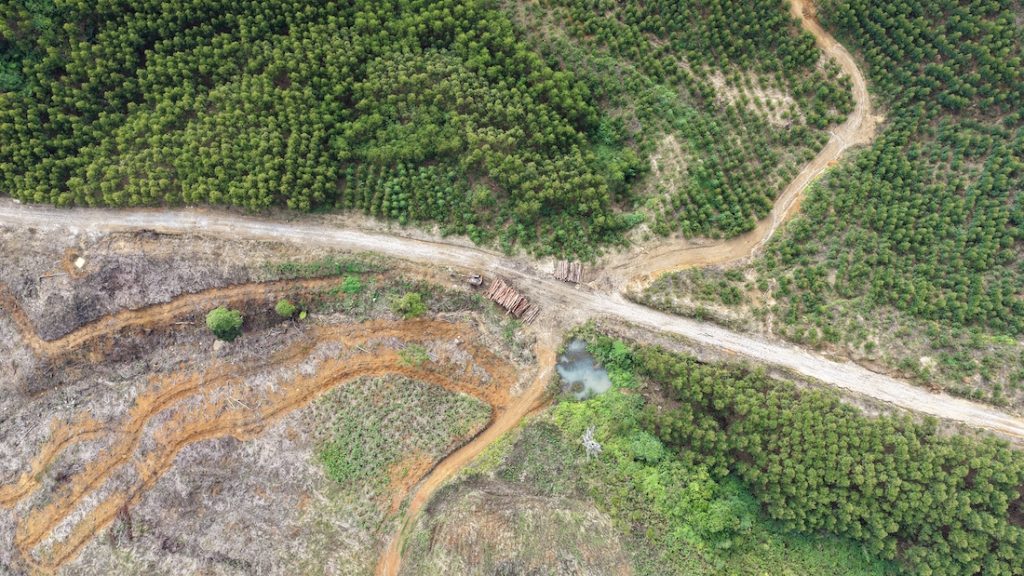
Manurung said Auriga’s analysis combined satellite imagery with field investigations in flood-affected watersheds in North Sumatra. “We documented logging roads, heavy machinery, and piles of tropical logs in areas that should have been protected. This happened on a very large scale over several years,” he said. “It is hard to believe activity of this magnitude could occur without the knowledge of both the company and local authorities.”
According to the report, at least 758 hectares of natural forest were cleared within the concession, with an additional 125 hectares extending beyond its boundaries. Field surveys revealed logs lacking the markings required under Indonesia’s timber legality system, indicating potential illegal sourcing.
TPL has rejected the allegations, stating that there is “no credible evidence” linking its operations to the floods and landslides in Batang Toru.
In a written response dated 23 December, the company said its activities complied with Indonesian laws and sustainability standards, and that it does not log natural forests.
“Based on spatial, hydrological, topographical, and operational data, these events cannot be attributed to TPL’s activities,” the company said, adding that the deforestation identified by Earthsight and Auriga was the result of “unauthorised third-party activities” beyond its control.
TPL also said some affected areas were part of community-managed land under a forestry partnership scheme and insisted that any planting carried out by the company constituted rehabilitation required under its permits.
The researchers disputed this explanation, noting that some of the illegally cleared areas have since been planted with monoculture eucalyptus, a pattern they say is inconsistent with third-party encroachment. “Why would illegal loggers replant eucalyptus?” Manurung asked during the press conference. “This looks like a gradual expansion of plantation operations.”
Indonesia’s Forestry Ministry has sealed five locations in the Tapanuli area, including two inside TPL’s concession, as part of an ongoing investigation. President Prabowo Subianto has ordered an audit of the company, while the Environment Ministry has said the disaster “cannot be attributed solely to natural causes.”
Auriga and Earthsight have urged the government to investigate where the illegally logged timber went, prosecute those responsible, and issue stronger regulations to protect remaining natural forests. They also called on international buyers of pulp and rayon products to scrutinise their supply chains for links to deforestation in Sumatra.
“This tragedy should be a turning point,” Manurung said. “If we do not stop deforestation in vulnerable areas, disasters like this will keep happening.” (nsh)
Banner photo: Drone image showing devastation from the recent flood disaster in Sumatra. Source: Auriga Nusantara