Jakarta – Civil society coalitions have once again reminded the government to consistently implement its commitment to reduce coal production as outlined in the National Energy General Plan (RUEN). The Publish What You Pay (PWYP) Indonesia coalition believes that plans to cut coal production should not be driven solely by falling commodity prices, but should be part of a long-term energy transition and environmental protection agenda.
On Wednesday, 7 January, the National Coordinator of PWYP Indonesia, Aryanto Nugroho, stated that the discourse on production cuts has too often been linked to market stabilisation interests. In fact, from the outset, RUEN has mandated production cuts as a strategic instrument towards a cleaner energy system.
“Production cuts should stem from a grand vision of energy system reform, not merely as a response to falling prices and declining profits,” said Aryanto.
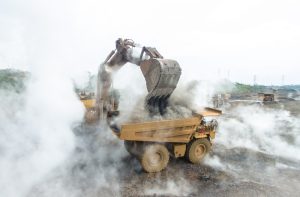
He believes that the surge in coal production, which is set to exceed 800 million tonnes by 2024, is a strong indicator that the energy transition agenda has not been properly implemented. According to him, excessive production will only prolong Indonesia’s dependence on fossil fuels and weaken the appeal of renewable energy investment.
“As long as coal is produced without strict restrictions, discussions about energy transition will always be contradictory. Emission reduction targets will not be achieved if supply at the upstream continues to be boosted,” said Aryanto.
PWYP emphasised that RUEN had provided clear guidelines, namely a reduction in coal production to around 400 million tonnes. According to Aryanto, this target should be reinforced as a binding commitment in national energy and climate policy.
“This adjustment in production is important so that Indonesia’s energy policy is in line with global commitments to control the climate crisis,” he said.
In addition to policy direction, PWYP also highlights governance issues that often accompany high coal production. Aryanto said that the increase in production has been accompanied by various problems, ranging from land conflicts with communities, environmental damage, to abandoned mine pits without restoration.
He believes that the planned production cuts should be used as an opportunity to carry out comprehensive reforms in the mining sector. “The government needs to ensure that only companies that comply with environmental and legal standards are allowed to continue operating. There should be zero tolerance for problematic mining practices,” he said.
On the other hand, Aryanto also warned of the potential risk of corruption when production quotas are reduced. According to him, quota scarcity could trigger rent-seeking practices and closed negotiations between business actors and policy makers.
“If it is not regulated transparently, reducing production could actually create new privileges for certain groups that have access and influence,” he said.
Therefore, PWYP urges that production reduction mechanisms be implemented openly, based on data, and prioritising environmental performance as the main criterion, rather than political proximity or short-term economic interests.
Previously, the government stated that it would lower its coal and nickel production targets in the 2026 Work Plan and Budget (RKAB). This policy was taken amid pressure on global commodity prices due to oversupply.
The Minister of Energy and Mineral Resources, Bahlil Lahadalia, said that the adjustment to production targets was made to restore market balance. He emphasised that this measure did not apply to just one commodity.
“We are implementing the reduction in targets across the board, for both nickel and coal,” said Bahlil after a press conference on the readiness of the energy and mineral resources sector for the 2025 Christmas and 2026 New Year holidays on Friday, 19 December.
According to Bahlil, the oversupply of coal globally has depressed prices on the international market. With global trade volume at around 1.3 billion tonnes and Indonesia contributing 500–600 million tonnes, the government believes that production policy needs to be adjusted.
For PWYP, this situation serves as a reminder that reducing coal production cannot be delayed any longer. Without consistent commitment to the RUEN, they believe Indonesia risks losing momentum in breaking its dependence on fossil fuels and building a sustainable energy transition. (Hartatik)
Banner photo: Tom Fisk/Pexels.com