Jakarta — The Ministry of Forestry and the Food and Agriculture Organization of the United Nations (FAO) have launched a IDR 74.6 billion (USD 4.4 million) project to strengthen Indonesia’s capacity to control invasive alien species, a growing threat to the country’s biodiversity.
The project, funded by the Global Environment Facility (GEF), was launched during an inception workshop in Bogor on Thursday, March 12. Named Strengthening Capacities for Management of Invasive Alien Species (SMIAS) in Indonesia, the initiative aims to improve governance, institutional coordination and on-the-ground management to prevent and control invasive species in key conservation areas.
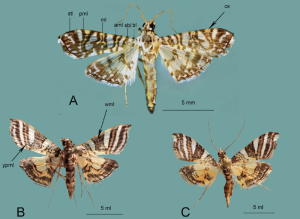
Invasive alien species — animals, plants or other organisms introduced outside their natural habitat — can disrupt ecosystems and harm native species. According to a 2023 report by the Intergovernmental Science-Policy Platform on Biodiversity and Ecosystem Services (IPBES), such species contribute to up to 60 per cent of global plant and animal extinctions and cause economic losses estimated at more than USD 423 billion annually.
Indonesia is considered particularly vulnerable. The country hosts one of the highest numbers of invasive alien species in Southeast Asia, according to the 2015 IUCN Species Survival Commission Invasive Species Specialist Group. Increasing trade, travel, land-use change and climate change have accelerated their spread across the archipelago.
Data from the Ministry of Forestry shows that invasive species have already been reported in more than half of the 54 national parks managed by the ministry.
The SMIAS project will focus on two conservation areas with high ecological value: Bromo Tengger Semeru National Park in East Java and Bantimurung Bulusaraung National Park in South Sulawesi, which contains the world’s second-largest karst area.
“The SMIAS project is a strategic initiative to strengthen governance, capacity and collaboration in the management of invasive alien species, from the policy level to site-level,” said Satyawan Pudyatmoko, Director General of Natural Resources and Ecosystem Conservation at the Ministry of Forestry, in remarks delivered by Director of Species and Genetic Conservation Ahmad Munawir.
The program will support improvements in policies, regulations and financing mechanisms, while promoting sustainable practices involving Indigenous peoples (Masyarakat Adat), local communities, women and youth.
Rajendra Aryal, FAO Representative in Indonesia and Timor-Leste, said the project is expected to benefit more than 2,000 people who depend on forest ecosystems for their livelihoods.
“By protecting Indonesia’s rich biodiversity, the project aims to also benefit many Indonesians whose livelihoods and food security depend on the forests, including Masyarakat Adat. FAO stands ready to provide oversight support, helping Indonesia deliver better production, better nutrition, a better environment and a better life that leaves no one behind,” Aryal said.
The initiative is also intended to help Indonesia meet international commitments under the Convention on Biological Diversity and the Kunming-Montreal Global Biodiversity Framework, including a target to reduce the introduction and establishment of invasive alien species by at least 50 per cent by 2030.

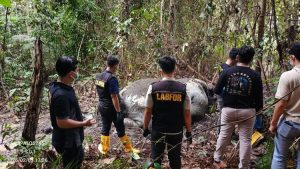
Government prepares elephant conservation directive
Separately, Forestry Minister Raja Juli Antoni announced that President Prabowo Subianto is preparing a presidential instruction aimed at safeguarding the population and habitats of Sumatran and Bornean elephants.
The policy follows concerns over the sharp decline in elephant habitat pockets across Indonesia.
“We checked the elephant habitat pockets that used to number 42; now only 21 remain. Without serious government intervention, the loss of these habitats is inevitable,” the minister said after a meeting with the president at the State Palace in Jakarta on Thursday.
Under the planned presidential instruction, ministries and government agencies will be directed to support conservation efforts, including establishing habitat preservation areas and ecological corridors that allow elephants to move between fragmented habitats.
These corridors could be created even in areas with existing palm oil concessions by designating preservation zones within plantation areas to reconnect elephant habitats.
The government is also preparing a presidential decree to establish a Task Force on Innovative Financing and Management of National Parks, which will explore sustainable funding schemes for conservation.
The task force will be chaired by Hashim Djojohadikusumo, with Raja Juli Antoni and former Indonesian trade minister Mari Elka Pangestu serving as deputies.
Indonesia currently manages 57 national parks, which the government sees as critical for biodiversity conservation. Officials say new financing mechanisms and partnerships with the private sector could help strengthen park management while supporting sustainable ecotourism.
As a pilot initiative, the government plans to test new management approaches in Way Kambas National Park, including measures to reduce human-elephant conflict through fencing, canals and community empowerment programs.
Officials hope the combined policy measures will strengthen wildlife conservation while allowing national parks to generate economic benefits for surrounding communities without compromising environmental protection. (nsh)
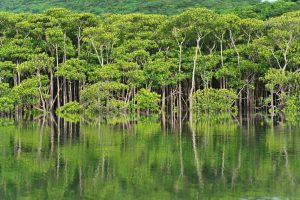
Banner photo: Bantimurung Bulusaraung National Park in South Sulawesi, home to the world’s second largest karst area. (Source: Bantimurung Bulusaraung National Park Office, via UNIC)