Jakarta – The Institute for Essential Services Reform (IESR) has emphasised that Indonesia’s dependence on coal-based energy will be a major obstacle to economic competitiveness in the future. Currently, Indonesia’s electricity sector is still held hostage by the use of coal-fired power plants, especially captive power plants owned by industries that contribute to more than a third of total national electricity emissions.
At the Brown to Green: Unlocking Enabling Environments for Indonesia to Transition Beyond Coal conference on Wednesday, 3 December, IESR reported that PLN’s 85 GW coal-fired power plants will produce 352 million tonnes of CO₂e emissions by 2024. However, the biggest spotlight was on captive industrial coal-fired power plants with a capacity of 31.1 GW, which contributed 131 million tonnes of CO₂e, equivalent to 37 per cent of the total emissions from the national electricity sector.
IESR Energy Transformation System Programme Manager Deon Arinaldo emphasised that Indonesia cannot continue to maintain an energy structure that relies on coal-fired power plants. “This policy is important to demonstrate the government’s commitment and send a clear signal to industry players, both coal and renewable energy, so that they can prepare their transition strategies,” he said.
Deon believes that the existing policy framework is not yet strong enough. Although Presidential Regulation No. 112/2022 regulates the acceleration of renewable energy, the government needs to take further steps. “All coal-fired power plants must reduce emissions after 10 years of operation, and all of them must cease operations by 2050,” he said.
He pointed out that the British experience shows that the transition from a coal-based economy requires careful planning and a long time frame.
The path to green energy needs to be made easier
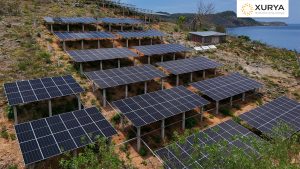
IESR urges the government to pave the way more quickly for the use of green energy. Mechanisms for shared use of transmission networks (PBJT), elimination of PLTS and BESS installation costs, simplification of licensing, fiscal incentives, and financing and risk guarantees for renewable energy projects are considered necessary to be realised immediately.
To reinforce these efforts, IESR launched Coalradar.id, an interactive data platform that provides a comprehensive overview of coal production, coal-fired power plant operations, state revenue from the coal sector, and regional vulnerability indicators. With interactive maps and regular updates, this website aims to assist in evidence-based policy formulation and support local governments in understanding their level of economic dependence on coal.
This platform also provides an analysis of provincial vulnerability to the decline of the coal industry based on trends from 2010 to 2022. This feature can serve as a starting point for regions to begin developing realistic transition strategies.
IESR emphasises that without easy and affordable access to green electricity, Indonesia risks losing its competitiveness in the global market and facing much higher transition costs. The high emissions from captive coal-fired power plants are not merely an environmental issue, but a real threat to the sustainability of the national industry in the era of a low-carbon economy.
Global investment in renewable energy, electricity grids, and batteries in 2025 has reached USD 2.2 trillion, double that of fossil fuel investment. Starting in January 2026, the European Union will implement the Carbon Border Adjustment Mechanism (CBAM), which requires exporters to Europe to report their carbon footprint. IESR estimates that similar mechanisms will spread to more countries as the world moves rapidly towards the Net Zero Emission (NZE) target. (Hartatik)
Banner photo: Image generated by OpenAI’s DALL·E via ChatGPT (2024)