by: Arpiyan Sargita*
The recurring deaths of Sumatran elephants in Riau Province can no longer be viewed as mere incidents of wildlife poaching. These events are clear indicators of the ongoing ecological crisis in Sumatra’s forest landscape, particularly in Riau. When an elephant dies, we not only lose a protected animal, but also see symptoms of systemic damage to the habitat and management of the area that should be their living space.
The Sumatran elephant (Elephas maximus sumatranus) is currently Critically Endangered, with a population of around 1,100 individuals throughout Sumatra. In Riau Province, the number is estimated to be around 216. With such a small population and a shrinking habitat, every death of an elephant poses a serious threat to the survival of this species.
In Jikalahari’s brief entitled “Elephant Slaughter Leading to Ecological Extinction: The Habitat Crisis and Landscape Management of Sumatran Elephants in Riau,” we describe the condition of elephant habitat pockets, the history of elephant deaths over the past two decades, and the relationship between forest- and land-based industrial expansion and increasing pressure on elephant populations.
Riau still has at least six elephant habitat pockets: Tesso Nilo National Park (TNTN), Giam Siak Kecil Wildlife Reserve, Balai Raja Wildlife Reserve, Sebanga PLG, Sultan Syarif Qasim II Tahura, and Buluh Cina TWA. However, most of these areas are now surrounded by industrial timber concessions (HTI) and oil palm plantations.
Pressure on elephant habitats is also evident from the rate of deforestation in these landscapes over the past two decades. From 2006 to 2025, deforestation in the Tesso Nilo landscape reached more than 112,000 hectares, followed by the Giam Siak Kecil Wildlife Reserve with more than 82,000 hectares, Balai Raja with around 9,900 hectares, the Sultan Syarif Qasim II Nature Reserve at around 4,900 hectares, the Buluh Cina Wildlife Reserve at around 4,500 hectares, and the Sebanga Forest Reserve at around 1,300 hectares.
Rapid changes in the landscape have fragmented elephant habitats into small, isolated fragments. The construction of corridor roads, land clearing, and industrial activities have expanded human access to forest areas. These conditions not only increase the potential for human-elephant conflict but also open up greater opportunities for wildlife poaching.
Over the past two decades, Jikalahari has recorded at least 77 Sumatran elephants killed in Riau. Most of these deaths occurred within or around industrial concession areas. A total of 51 were found in concessions affiliated with the APRIL Group, and 11 in concessions affiliated with the APP Group. The most common causes of death were poaching for ivory, poisoning, snaring and disease.
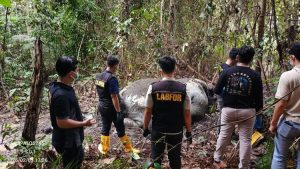
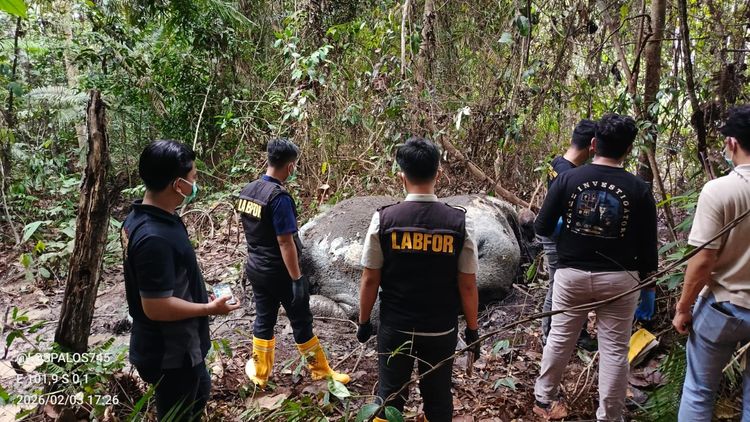
The most recent case occurred in February 2026, when a male elephant over 40 years old was found dead without tusks in the concession area of PT RAPP in the Ukui sector, Pelalawan Regency. The autopsy results showed indications of gunshot wounds and severe head trauma related to illegal hunting practices. Twenty-two days later, a wild elephant calf was found dead in the Tesso Nilo National Park area, suspected of having died from an infection caused by a snare wound.
This incident shows that elephant deaths continue to occur in the same area, often in landscapes dominated by industrial concessions. If this situation is allowed to continue without serious corrective measures, the threat of ecological extinction of Sumatran elephants in Riau will become increasingly real.
Another issue that exacerbates this situation is the weak enforcement of wildlife crime laws. Jikalahari found that elephant poaching in Riau often involves the same perpetrators. One example is Anwar Sanusi, alias Ucok, who has been prosecuted several times for elephant killing and ivory poaching.
However, the sentences handed down in a number of cases ranged from only one to three years in prison, far below the maximum penalty under the Conservation Act. When the penalties are light, and the poaching networks are not dismantled, including the financiers and ivory trade chain, elephant poaching will continue to recur.
This situation shows that the issue of elephant deaths cannot be viewed solely as criminal acts committed by individual poachers. It is a reflection of a crisis in landscape management, where habitat protection, area surveillance and the responsibilities of licensed companies have not been effectively implemented.
Companies holding concession licences cannot absolve themselves of responsibility when protected animals are killed within their working areas. Under national law, licence holders have an obligation to maintain the sustainability of environmental functions and protect areas from illegal activities, including the hunting of wild animals.
Without a comprehensive evaluation of landscape management, elephant conservation efforts will merely be a reaction to tragedy after tragedy. We will continue to record death after death without ever truly addressing the root of the problem.
Therefore, Jikalahari recommends several urgent measures. First, the Ministry of Forestry needs to conduct a comprehensive evaluation of concession permits located within or directly adjacent to elephant habitat pockets in Riau. Second, the Riau Regional Police must conduct a thorough investigation into the deaths of elephants in industrial concession areas and uncover the ivory poaching network, including its financiers and the trade chain for protected animals.
In addition, the Forest Stewardship Council (FSC) and other sustainability certification bodies need to halt ongoing certification processes for companies that are deemed to have failed to protect high conservation value areas and protected species within their concessions.
Ultimately, the future of Sumatran elephants in Riau will be largely determined by the decisions made today. If habitat destruction continues unchecked and forest management is not improved, we will not only lose the elephants—we will also lose the integrity of the forest ecosystem that supports human life in Sumatra.
The death of elephants is a stark warning. The question now is: will we heed it, or will we once again allow it to become just another statistic in the long list of conservation tragedies in this country?
*The author is Deputy Coordinator of Jikalahari.
Banner photo: The Riau KSDA Office, together with the Riau Regional Police Special Criminal Investigation Directorate team and PT RAPP, conducted inspect the location where a dead elephant was found. 3 February 2026. Source: Ministry of Forestry.