The ASEAN Guiding Principles for Effective Social Forestry Legal Frameworks (AGP) present a shared regional framework to help strengthen laws, policies and institutions supporting social forestry across Southeast Asia. The principles were developed through an inclusive process with RECOFTC, the ASEAN Secretariat and ClientEarth.
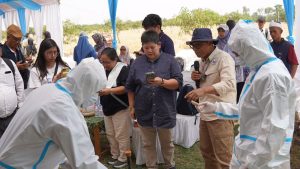
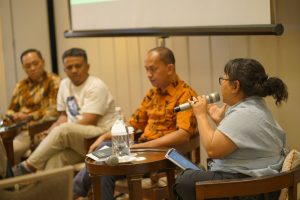
Building on the AGP and national workshops, recent assessments in Lampung and Lombok revealed practical challenges faced by Indigenous Peoples and Local Communities in navigating social forestry permits. This is especially true when it comes to understanding procedures, defining eligibility, and clarifying forest areas. As a result, targeted training for local forest agency staff was conducted in October 2025 to build capacity to apply the AGP, improve regulatory understanding, and support a more accessible, rights-based permit process. This initiative supports Indonesia’s national goals while aligning with ASEAN commitments through the ASEAN Working Group on Social Forestry (AWG-SF) platform, helping bridge regional principles with local realities.
Importance of social forestry
Forests cover nearly 193 million hectares (44 % of land) in the ASEAN region, playing a critical role in climate regulation, biodiversity protection and rural livelihoods. Recognition is growing that Indigenous Peoples and Local Communities are key forest stewards. However, many legal systems still do not sufficiently enable their participation and rights. The guiding principles aim to provide a regional baseline that ASEAN Member States (AMSs) can use to assess, develop or reform social forestry legal frameworks to better support sustainable and equitable forest management.
The AGP defines social forestry broadly as the management of forests by and for Indigenous Peoples and Local Communities, covering models such as community forestry, community-based forest management, community-protected area management and village forestry. These approaches place local people at the centre of governance, expanding focus from forest conservation alone toward livelihoods, enterprise development and climate resilience.
While AMSs have made progress in expanding areas under community management, scaling social forestry is constrained by insecure tenure, weak legal frameworks, limited governance capacity, inadequate financing and barriers to community access. Strong legal frameworks matter because they provide clarity of rights and responsibilities, enhance accountability, and create the conditions for communities to engage effectively in forest governance and benefit equitably from forest resources.
Guiding principles
The guiding principles emphasise the need to recognise and protect communities’ land and forest tenure rights through clear legal frameworks that include customary rights and knowledge. Laws should simplify the allocation of social forestry areas by making processes transparent, accessible, and affordable for communities, while also establishing clear rules for social forest management through simple, comprehensive, and community-tailored management plans.
Legal frameworks must support strong internal community governance by promoting accountability, transparency, and inclusive decision-making, and ensuring meaningful participation of all community members, including marginalised groups. They should enable communities to access markets and economic opportunities linked to social forestry products and services, while ensuring equitable benefit-sharing among community members and relevant stakeholders.
Social forestry laws should also include fair and accessible mechanisms for conflict resolution, drawing on both customary and formal processes, and clearly define offences, sanctions, and enforcement responsibilities for communities and authorities. Finally, legal frameworks should allow and encourage external support from governments, NGOs, the private sector, and international institutions, while respecting and safeguarding community autonomy.
The principles are intended for use by policymakers, government authorities, NGOs, donors, civil society and communities themselves. They are legally non-binding, but guide national and subnational legal reforms, strategy development and assessment of existing laws against regional best practices.
This article is published in cooperation with ClientEarth. The views and opinions expressed are those of ClientEarth and do not necessarily reflect the views or editorial position of tanahair.net. https://www.clientearth.asia/