by: Mochamad Indrawan* and Kishore Dhavala**
The Indonesian Climate Village Program, better known as ProKlim, is one of the most innovative public policy instruments to have emerged to date in Indonesia’s response to climate change. Established in 2012 by the Ministry of Environment and Forestry, ProKlim embodies climate change adaptation and mitigation with community-led development at the village level. While an environmental initiative by design, its impact stretches significantly beyond climate policy into the ways in which local economies, governance, and social cohesion are being reshaped through ecological stewardship.
At its very core, ProKlim fosters a community-oriented approach to climate action. It calls for villages to design and implement locally appropriate measures for land management, water management, forest management, and energy management, reflecting specific ecological and social conditions. This is a bottom-up approach, and it differentiates ProKlim from more technocratic programs dealing with climate issues.
Instead of considering communities as beneficiaries, ProKlim considers them active agents of change. This idea of ProKlim has been very suitably and simply put forth to the international community in the “Cross Asian Dialogue on Rural Development – Asia’s Shared Challenges and Opportunities,” which was held from 8–11 December 2025 at Nalanda University in India, and collaborated by Sasakawa Peace Foundation, Asian Confluence, and Musubi-Te.. There are ways to restore the environment and thereby strengthen local economies-a virtuous cycle wherein ecological health feeds economic resilience.
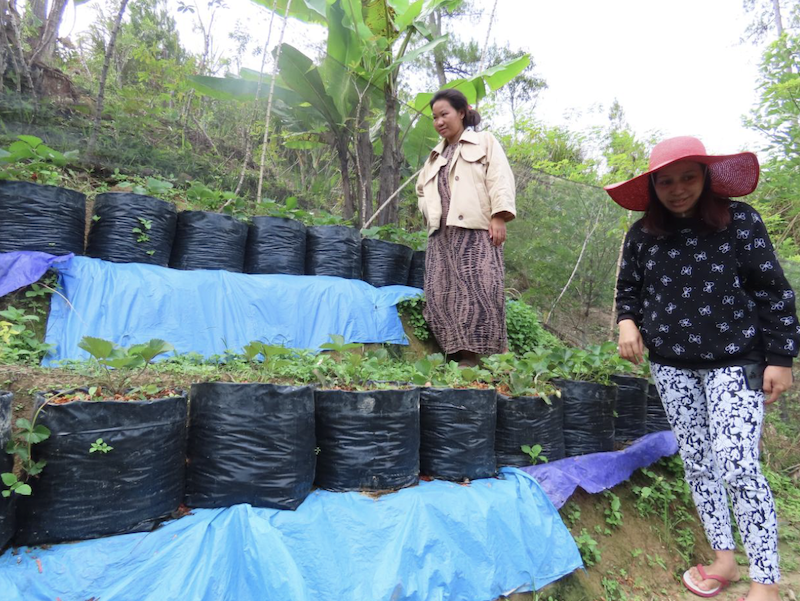
Perhaps the most important contribution of ProKlim is the formal recognition it provides to community initiatives that otherwise would remain invisible. In outlying rural areas, agriculture, forest management, and water governance all rely heavily on collective labor, customary norms, and informal institutions.
By providing national-level recognition of this work, ProKlim pushes local climate action onto the public policy stage, legitimizing community knowledge and practice. Such recognition has stimulated local governments to engage more dynamically with villages. The latter fostered cross-sectoral collaboration and assisted in mobilizing public investment in line with local climate imperatives.
In an economic perspective, ProKlim strengthens the development of circular, diversified, and resilient village economies. Ecological restoration-soil health improved, biodiversity increased, and water retention enhanced-is key to more resilient agriculture.
Diversified farming systems reduce the dependence on a single commodity that could be put at risk by climate shocks or price volatility. Many participating villages adopted agroforestry systems composed of food crops, fruit trees, shade trees, and timber species that improve the condition of soil moisture and microclimate while spreading economic risks. In other areas, ProKlim catalyzes the emergence of climate-sensitive value chains, including shade-grown coffee, non-timber forest products, and herbal gardens used in traditional and commercial medicinal production.
From South Asia, a similar underlying approach may be found in the way India pursues its climate-resilient village initiatives. This endeavor was underpinned by a similar policy understanding: namely, that climate action and economic resilience may positively reinforce each other.
The Government of India is advancing its objectives under the National Action Plan on Climate Change and the National Mission for Sustainable Agriculture through the National Initiative on Climate Resilient Agriculture. Climate Resilient Villages (CRV) under NICRA advance diversified farming systems, agroecosystem management, organic waste recycling, and reduced-input agriculture in climatically vulnerable parts of the country. These increase land productivity and stabilize incomes, showing how the restoration of natural capital can be a driver of economic transformation.
While sharing these principles, the two approaches differ in their institutional underpinnings. ProKlim is based on national recognition and programmatic incentives to encourage community-level initiatives within Indonesia’s decentralized system of government. In contrast, the climate-resilient villages in India are underpinned by the Gram Panchayat system, where village self-government institutions have a key role in planning, decision-making, and natural resource management. This contrast reveals diverging routes to embedding climate action in local governance and is shaped by the specific administrative and political context of each country.
Jointly, ProKlim and climate-resilient village initiatives show how climate policy goes beyond emissions and adaptation metrics toward the reinforcement of local leadership, communal governance, and long-term resilience.
In its optimum form, climate-resilient villages showcased a coherent and grounded route toward their climate and development goals. The holistic approach is stable, sound, and socially rooted, showing the world that community-owned climate action may become a cornerstone of lasting national resilience.
*Mochamad Indrawan is an ecologist at the Research Center for Climate Change, University of Indonesia
**Kishore Dhavala is an Associate Professor at the School of Ecology and Environment Studies, Department of Economics and Deputy Dean of International Relations, Nalanda University
Banner photo: Proklim activist Adian Sudiana, resident of RW3 Cempaka Putih Timur, Jakarta. August 22, 2024 (nsh/tanahair.net)
***Updated: Wednesday, Dec. 24, 2025, 16.17. Adding details of the co-host of the dialogue at Nalanda University, India. Added illustration photo.